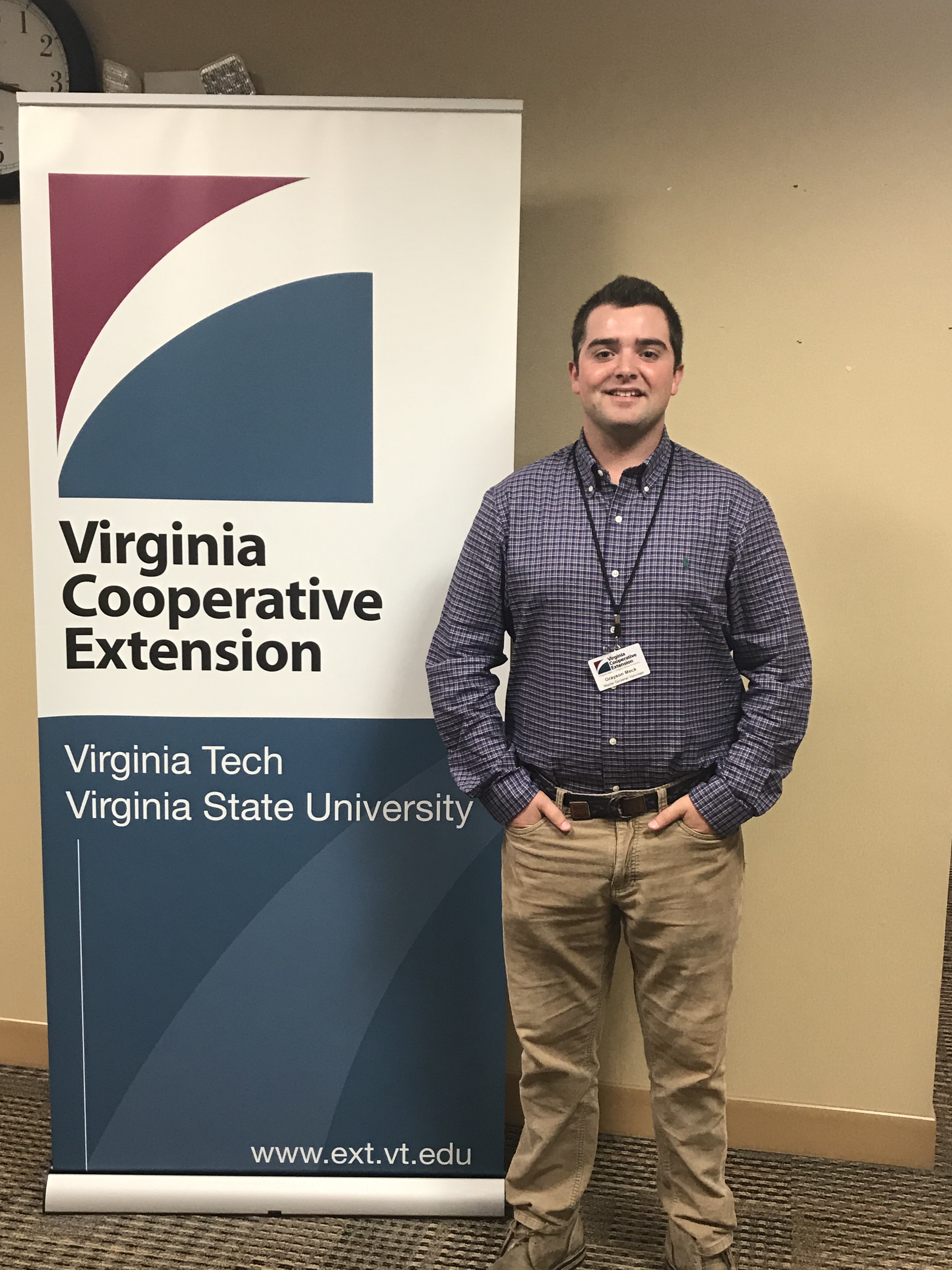
Weekly Extension Internship Reflection #2

By: Grayson Meck, Virginia Tech Agricultural Sciences

Copy of Day Camp Flyer
Copy of Bug Bizarre Flyer

A Summary of This Week

Since my initial posting last Friday, I have learned more than I could’ve ever imagined heading into my first day here at the Henrico Extension office. Whereas last week was comprised of several different meetings to discuss upcoming programs such as the Bug Bizarre and Horticulture Club activities, this week was much less scattered with events like those. On Tuesday, however, Ed and I did take a trip downtown to the Department of Forestry to discuss some of the insects that they plan on showing at the Bug Bizarre in September. But at the forefront of our agendas this week has been our discussions about the program designing of an upcoming 4-H youth day camp coming up at the end of June through the end of July. Essentially, the camp is a 5 week program made up of a Food Day Camp from June 17th-21st, Horticulture Day Camp from June 24th- 28th, Crafts Day Camp from July 1st-12th, Environmental and Natural Resources Day Camp from July 15th-19th, and finally the Money Day Camp ending the final week of July. As Ed’s job title indicates, his area of expertise is primarily focused on horticulture program areas concerning plants/gardening, bugs/pests, and pesticides/treatments. That being said, Ed and I had to decide which day I could lead one of those camps, as well as which camp would be most suitable for me based on my background and my studies. Eventually we decided that I would cover Pollinators, Plant Anatomy, Plant Processes, and an activity on aquaponics on the first day of Horticulture Day Camp on June 24th. And since I had previously helped lead a few of the activities last week with the Horticulture Club’s study on Environmental and Natural Resources with Ed, I also agreed to lead the final day of that Day Camp as well.

Once I picked the particular camp and day I plan on leading the activities, Ed showed me a vast amount of resources from which I could find previously used activities and other resources in an effort to plan out an organized, engaging day filled with both education and fun for the kids. So far, I am relatively close to reaching the four hour mark with about 7 or 8 activities that I believe cover the main topics for my particular day on June 24th, and I am now transitioning to the final day of the Environment and Natural Resources camp on July 19th. As opposed to my planning for the Horticulture Day Camp where I had no previously used activities, I am already well underway for this day since I can use similar activities from last weeks Horticulture Club. Overall, this week was a good indicator of the varying schedules from one week to the next in the life of an extension agent. Of course, I had already learned about this flexibility in my Introduction to Cooperative Extension class through interviews of agents at Virginia Tech, but actually being a part of it firsthand truly puts it into perspective how adaptable agents are on a daily basis. Also, I have began to better understand how to utilize the program planning strategies we had learned in that same course in a real-time, hands-on experiences. In doing so, I am aware of the important methods necessary to plan a truly beneficial program, as well as the importance of allotting time for each activity to ensure that every minute on my particular day will be worthwhile. In summation, I look forward to next week’s learning experiences and especially excited for Celebrate Varina tomorrow from 10 am-2 p.m. at Dorey Park!

Weekly Extension Internship Reflection #1

By: Grayson Meck, Virginia Tech Agriculturual Sciences

Monday, May 20th:

As I arrived to the Human Services Building where the Henrico Extension Office is located here in my hometown, I was filled with a mix of eagerness, anxiousness, and excitement. I had little to no idea what to expect other than the short description provided on the internship page of their website. I knew my supervisor, Ed Olsen, was the horticulture agent, but at school we hadn’t dicussed the urban aspect of Extension work and, as I would soon discover, the extremely diverse, substantial areas that they seek to provide for the public. Nonetheless, I arrived with a nervous feeling that I masked with a confident, head-held-high type of montra, and I was immediately pleased to see Ed in person for the first time as he walked out with an inviting, friendly smile and a firm handshake that truly made me feel like I would fit in right away. Interestingly enough, the very first thing I did here in the Office was to attend a meeting in which Kim Edmunds (Department Head), Kendra Young (SR Extension Agent-4-H), Soraia Hall (Youth Program Asst), Terry Lautzenheiser (Extension Technician), Angela Wrigglesworth (County Administrative Asst), and Angelina Green (Unit Administrative Assistant) were all present. It was a great way for me to hear about current programs, funding issues, and visualize the communication methods used by each co-worker in an effort to provide aid to the general public in efficient, enthusiastic way. Following the meeting, Ed and I took care of my orientation followed by a tour and background check by Angela. The rest of that first day consisted of getting to know the folks in the office, as well as a whole lot of paperwork! I was relieved, my first day was a hit and I looked forward to arriving the next morning.

Tuesday, May 21st:

The following day began with a minor travesty as Ed had told me we had a site visit to observe Emerald Ash Borer’s effect on trees at 8:30 that morning, but what I didn’t take into account was that I needed to be there 15 minutes prior to that so we could get there on time! So, I spent that morning knowcking out some of the required online powerpoints covering Civil Rights and Title IX that is required of all Extension and Virginia Tech employees. Upon Ed’s arrival from the site visit, our next order of business was to conduct a meeting with 6 or so Master Gardeners and Master Gardener Interns in which we disucssed the progress made for an upcoming event called the Bug Bizarre. Of course, I had no idea what to expect and in my mind I figured it would be a small workshop in which children could interact with insects, but it turned out that it was a huge, 3-hour event comprised of over 40 booths with representatives from all over the county (including Havover Extension)! Among my favorite booths included a Madagascar Cockroach race, a coloring book station–whose storyline was created by Ed himself–and a photo booth cutout for the kids to pose behind. The creativity amongst the group was amazing and new ideas were circulating right off the bat. I look forward to contributing the the Bug Bizarre further in the weeks to come. That afternoon, I was in charge of preparing for Ed’s Horticulture Club meeting scheduled from 4-6 that night. These duties included shredding colored paper to be made into colorful plant cakes for each child to bring home, collecting rocks and sharpies for the insect rock coloring activity I would lead myself, and cutting little strips of string for an activity I would lead on camouflage. I must admit, even leading an activity for a small group of 5-7 kids still made me a little bit nervous, but once they arrived, I was relieved to find that it would go much better than I was expecting. I was proud to have lead a group already on my second day, and I gained lots of confidence for programs ahead.

Wednesday, May 22nd:

At the end of the previous day, Ed had informed me about the Bed Bug Conference he had planned for us to attend in Church Hill. To say that I had mized expectations would be an understatement. However, we arrived to the Richmond City Extension Office, and I was immediately intrigued and curious to hear about the severe outbreaks of Bed Bugs in the Richmond area over the past 5 years. The specialist who led the presentation made the lon session much more enjoyable as she was an excellent public speaker. Not only was I learning things that I had previously never even considered, but I got to see how a specialist can use the research from Virginia Tech alongside VCE to provide helpful, vital information to those that need it the most in an effort to improve the lives of local, county, and state citizens. Among the groups in attendence were managers of public housing, and I could tell at the end that they had benefited greatly from the presentation, and I am positive that better ways will be used to treat Bed Bug infestations in the future.

Thursday, May 23rd:

On Thursday, I had the chance to sit in on a Pesticide Recertification Program for the sprayers, schools employees, and other government employees who use pesticides in their daily work. The program was a long one, but I hadn’t heard much about pesticides at all other than RoundUp, so I was intent on soaking up as much new information as I could. Ed led the first topic on Ornamental Pest and Disease update and IPM, which covered some of the most recent pest problems we’re facing here in Virginia. It was interesting to me to see the ways in which non-native bugs have travelled from Asia to America, and then from State to state as they spread wider and wider across East Coast. Some of the other topic discussion included Rodent and Cockroach management, Integrated Mosquito management update, arbovirus update, legal update, and sprayer calibration, drift, and the relationship to droplet size. Over the course of the course, I learned loads and loads of new information that even had me looking more information up on my phone later that night. My intern duties shifted towards petty work following the event as I was in charge of claning up, rearranging the chairs, and then reviewing the survey questionnaires submitted by each applicant which questions regarding their overall takeaways, room for improvement, and ways they will change their spraying methods in the future. It took some time to review all 33 surveys, but I did so dilligently because I know how important it is to not only design and execute a program, but also to asess and evaluate the results at the end. Every applicant essentially thought the program was a success as well, so it was an easier process to compress their responses in my report to Ed at the end of the day. I look forward to learning more about pesticides and pest treatment in the future!

Today, Friday, May 24th:

Today is a much less structured day in terms the lack of events or meetings we had attended in the previous days, but it has had its fair share of new things for me to try. I have converted numbers from soil submissions here to the numbers that Virginia Tech researchers will use to grade and asess the same samples in their labs when they are shipped there next week. Although tedious, I found it interesting the see the different levels of elements in the soil as I went along. Secondly, I took on the role of a weekly Facebook post that will provide a picture and a description of a speces that is currently blooming. This weeks post is on the Sassafras Tree. Currently, I am writing my reflection to finish off the week! I am very happy with the way this week has gone including the friendly climate of the office, the very wide variety of people and programs I have already taken part in, and the feeling of being a part of something greater than myself.

Unit #5: Diversity, Team, Organizational, and International Culture, Virtual Teamwork, Evaluating and Rewarding Teams, and Team-building/Training

By: Grayson Meck

Image result for Diversity in teams

What?

Over the past two weeks in Elements of Team Leadership here at Virginia Tech, our focus shifted from the importance of recognizing and identifying the styles of power that leaders typically have, to the topic of diversity and the ways in which effective teams utilize it to their advantage rather than let it create strife among members. Of course, there are many connections to this Unit and that of power, mainly concerning the likelihood that certain members will utilize their demographic, organizational, or differentiating opinions against the team if enabled. To me, the most important activities we did in the past four class meetings were both the Attitudes Towards Diversity Survey and our most recent class discussion regarding the diversity of International Cultures in a case study about American architects working with Japanese architects over seas. Both discussions highlighted the importance of inclusiveness for some Nations versus the hierarchical-oriented direction that nations like Japan follow rigorously in the workplace. Levi’s “Group Dynamics for Teams”, which has been referenced through the past couple Units, defines power in teams as “the degree to which people in a culture accept unequal power” and that “In high-power cultures, large power and status difference are acceptable” (Levi). So, once we read Levi’s expertise on the topics and dug deeper into our own attitudes towards diversity with the survey, we were prepared for today’s discussion about whether transnational teams should adhere to the social norms of another countries’ high-power cultures or if they shouldn’t tolerate their ethics.

So What?

Following the class session when we took the Attitudes Toward Diversity survey, I felt pretty tolerable to the results which indicated me as a highly appreciative individual concerning diversity. Although the survey showed that I had a mediocre score in the Diversity of Contact section–which means my interest in participating in diverse activities is low–I plan on using this information on a day to day basis in the future, and it was also very useful information for the architect case study discussion we had in the previous class because I knew it would influence the way in which I would act if I were the CEO of the American Architect company. In a brief summary of the study, the CEO of the American Architecture company saw that the Japanese company interacted very uncomfortably to the employees of color or of female gender on the American team. So, he had to decide if he would simply exchange these employees for white workers and avoid conflict, resist and explain to them that that was how it would run and end the discussion there, or to simply back out of the companies’ largest job to date. The reason why this conflict arose in the first place can be summarized with Levi’s take: “U.S. organizations tend to display individualism, low power, and risk taking, whereas Japanese organizations tend to display collectivism, high-power, and risk avoidance”(Levi). Furthermore, another author writing on the topic of risk avoidance concluded, “While the complete elimination of all risk is rarely possible, a risk avoidance strategy is designed to deflect as many threats as possible in order to avoid the costly and disruptive consequences of a damaging event” (SearchCompliance). So, the risk avoiding Japanese architects might’ve been acting awkward around folks of color and women because there seemed to be some risk to it or because it is simply a different part of their culture that Americans can’t understand. In either case, the CEO used an assertive power strategy to take the situation into his own hands as a responsible leader would do, and he weighed out the pros and cons to each option he had. Another author writing on the disadvantages of working in transnational teams wrote: “In operating trans-nationally, you open yourself to legal and political risks. For example, the new country that you are trying to enter may have standard practices that are illegal in your home country or vice versa. You also may encounter political risks” (enotes). Of course, black employees and women aren’t illegal in Japan, but Americans must have the emotional intelligence to at least study ahead of time before they send their selected group of individuals overseas because strife like the architect case study will occur undoubtedly. In the end my group, as well as the majority of the other teams in our class decided that it takes diligent planning and organization when it comes to teams among different cultures and countries. If the CEO had done his research ahead of time, he could’ve taken care of the issue back in the U.S. before collaborating with the Japanese company where he put them in a completely different environment then they are used to. However, the question remained: Should transnational teams simply adhere to the power structure of other countries or should they not tolerate different perspectives across the globe?

Now What?

I have made countless notes to myself throughout this unit, but the primary takeaway is that experts in the leadership and diversity fields differ in their opinions significantly when it comes to interactions among transnational teams. One author that puts the idea of diversity into perspective the best in my opinion supports the following: “It takes more than just putting people of diverse backgrounds and perspectives together and seeing what happens, you need a strategy to help them to work together. So while building a diverse team is a worthy goal, we need to put some thought into how to make it work” (Inc.com). In the case of the case study above, the answer to the question in my formulated opinion is that we MUST collaborate with other countries in teams if the ultimate goal is to blend cultures in a positive, productive way, but we have to be very emotionally intelligent when it comes to adhering to social norms, traditions, and customs of the culture we hope to work with. As the survey earlier in the Unit proved to me, I appreciate the differences that diverse demographics can contribute in teams, so I believe my decision to not run away from the conflict in the architect scenario and to take it head on is because I assume that other cultures are willing to change because of my own American way of thinking. Whether this is naive or romantic thinking, I stand by the fact that proper planning and studying of the opposite culture can surmount the differences between the two, and in the future I plan on preaching this newfound conclusion of mine in future job situations where I am working with other Nations.

References:

https://searchcompliance.techtarget.com/definition/risk-avoidance

https://www.enotes.com/homework-help/disadvantage-transnational-strategy-445804

https://www.inc.com/greg-satell/science-says-diversity-can-make-your-team-more-productive-but-not-without-effort.html

Blog #4: Managing Conflict, Power and Social Influence, Decision Making,Leadership, Problem Solving, and Creativity

By: Grayson Meck

Image result for Managing Conflict in teams

What?

Over the past two weeks since my previous blog which covered the seven skills of a team’s emotional and social intelligence concerning each team members ability to read and react to the emotions and feelings of other members. Our next topic in Elements of Team Leadership here at Virginia Tech was about power and its several different forms, as well as the inevitability of team conflict and the different ways in which members should deal with it. Exploring power in teams and the importance to comprehend its upsides and downsides was very interesting to me, but I felt that our discussions about conflict were the most important class periods for Unit 4. In Levi’s “Group Dynamics for Teams”, he confirms that conflict is not only normal, but is essentially required for teams to perform at their highest level. He writes, “In a dynamic team, conflict is a normal part of the team’s activity and is a healthy sign. If a team has no conflict, it might be a sign of a problem” (Levi). He furthers this point by explaining that “Conflict may arise from many sources, including confusion about people’s positions, personality differences, legitimate differences of opinion, hidden agendas, poor norms, competitive reward systems, and poorly managed meetings” (Levi). In class, we explored several ways to deal with these conflicts and took an assessment to see which style of leadership we possess, as well as another assessment which focused on the approach that each member typically approaches conflict resolution.

So what?

As Levi stresses in his book, it is impeccable for each members to understand that the “storming” stage of productive teams will certainly happen. Whether members choose to speak up or ignore a particular conflict is important to consider, however. It is important to at least say something if you disagree with someone’s perspective, decisions, or even something they might say. Levi emphasizes this strongly, and many other authors agree with this point such as this author who writes, “You can choose to ignore it, complain about it, blame someone for it, or try to deal with it through hints and suggestions; or you can be direct, clarify what is going on, and attempt to reach a resolution through common techniques like negotiation or compromise” (Mindtools). In class, our teams took an assessment to figure out what our own leadership styles were, discussed them with each other, and determined if we believed the assessment was accurate. In hindsight, I believe the assessment was very right about my own style, which was the Supporting style. This meant that I don’t need someone to direct me step-by-step, and I also wouldn’t like it if they were completely dis-involved in leading me. This carried over for our second assessment that focused more on the idea of conflict and our personal ways of dealing with arguments or disagreements. I ended up scoring very high in the assertiveness category because I had high levels of confrontation, compromise, and collaboration–This means that I often times actually try to use influence or power too strongly in my attempts to mitigate conflict. Forbes magazine’s article on this topic says this about folks who use power to suppress others opinions: the author writes, “Every workplace is plagued with manipulative people who use emotion to create conflict in order to cover-up for their lack of substance”(Forbes). Now, I don’t believe that assertive conflict approaches are all leaders such as these types of leaders, but I do believe that I have a tendency to block out opinions of people who I know have different opinions than I do. So, once I realized I needed to be more cooperative in order to reach the level of collaboration that I desire, I concluded that I have to listen and be willing to change my mind on any issue in any team I’m involved it. Another author has a different 5 approaches to conflict resolution, but essentially covers each of Levi’s points as well. In his article, the author names the five approaches as Avoiding, Accommodating, Compromising, Competing, and Collaborating (Coach). The only word that is different from Levi’s is competing, but the idea is the exact same as confrontation–which was my strongest category. Simply put, in class everybody agreed that every category on the list is okay as long as avoidance is not one of them. Teams MUST locate issues, be open and communicative about them, and then discuss ways in which the conflict can be resolved.

Now what?

The key takeaways I have made from Unit 4 include my desired type of leadership to me in a team or workplace and the negative ways in which I currently deal with conflict. With that being said, I am not ashamed that these are the revelations I have confirmed about my leadership capabilities, and simply want to look into the future and see the leader that others around me in my future career will not only be okay with, but could even look to me to resolve issues among members, conflicts regarding decision making, or personality disputes. As I stated before, the best way for me to do so is to practice listening and also let those who are leading me know what style I prefer. In doing so, I will shift towards a more collaborative, cooperative members who is willing to change their opinion about any decisions or statements that I have upheld for even my entire life. In summation, I must be more willing to see conflict as a good thing and emphasize this to those around me as I pay attention to where their own thoughts are coming from in any group or team environment.

Websites referenced:

https://www.mindtools.com/pages/article/newTMM_79.htm

https://www.forbes.com/sites/mikemyatt/2012/02/22/5-keys-to-dealing-with-workplace-conflict/#1be733561e95

https://www.coach.ca/5-approaches-to-conflict-management-p159659

Blog #3: The Entirety of Hughes’ ‘The Emotionally Intelligent Team’ with Emphasis on Emotional Intelligence in Teams

By: Grayson Meck

Image result for emotionally intelligent teams

What?

Recently in class since my last blog, we have had many insightful discussions and individual work on our Service Learning Projects, a Readiness Assurance Test (RAT) centered on the entirety of Hughes’ ‘The Emotionally Intelligent Team’, and even a quiz designed by Dr. Rateau on the topic of using emotional intelligence to determine the emotions of a group member based on their facial expression. Not only was the quiz essential to shaping my understanding of the need for facial recognition as a key aspect of EI, but it also acted as a way for our team to bond even further in terms of social cohesiveness, which I identified as a key component to successful teams–in contrast to teams who are solely task-oriented. Over the last two weeks, I have focused primarily on the importance of EI on the success of teams, and have encountered several references in Hughes’ writing that have struck me as not only necessary for productive teams to acquire over their forming and norming stages, but more-so as a must for any team that wishes to have success in accomplishing a task that improves the greater good of their community. Specifically, Hughes’ input on the requirement for teams to first establish an identity–refer to blog #2–and then put the majority of their attention on the establishment of norms, expectations, etc. in the form of a contract. In these norms, multiple aspects that emotionally teams exhibit are to be highlighted, emphasized, and then put into practice in every scenario that said team interacts with each other. In today’s climate, as Hughes emphasizes, “Never before have so many pressures been exerted on companies at once, and the solutions for adapting to them all can only be found by evolving and ESI (or EI) skill set that provides the flexibility to accommodate changing market dynamics”(Hughes). In layman’s terms, “Team interactions are inherently emotional”, so establishing a contract which holds team members accountable for their treatment, inclusion, and identification of other members’ viewpoints is essential for successful teams, aside from forming their identity. As many other authors agree with, emotionally intelligent team members have the ability to not only consider their own emotions in open discussions, but also to assess, consider, and evaluate the emotions/thoughts of other team members is the said team intends on getting task-oriented things done.

So what?

To understand the necessity of EI’s vitality to the teams being formed in today’s businesses, it is essential to consider ways in which successful emotionally intelligent team members are, in fact, good at realizing the feelings of their co-workers. As this author writes–and also coincides very well with Hughes’ thoughts on the importance of EI in functional teams–it is essential to figure out the strengths and weaknesses of each and every member from the beginning. In my first semester course with Dr. Rateau, we discussed the establishment of strengths and weaknesses for each individual members’ benefit. However, when it comes to a team, it is impeccable that each members can also see the strengths and weaknesses of other team members in their effort to use EI to their fullest advantage. Furthermore, an emotionally intelligent team member will not only utilize these realizations to their advantage, but will inform other members of the positive attributes that team member strengths will bring to the success of the team overall, as each individual member can contribute in ways that their co-worker may not be able to. An example of utilizing team member strengths occurred when my team made our own contract for our Service Learning Project with Battling Bars, a club here at Virginia Tech, in which we saw that team roles should be centered around each members’ strengths. This means that since I am a good communicator, I would write the bulk of the written parts of our Project Proposal, while Jenna, who is a good coordinator and planner, would be in charge of scheduling meetings and creating agendas when we did meet. What it boils down to in the development of a success team is each individuals’ desire to focus on the emotions of the people he or she is working with, and Hughes describes this phenomenon in his section entitled ‘Anger or Positive Attitude-It Matters’. He writes, “The ESI skills of emotional awareness, communication, and conflict resolution will probably prove most helpful when teams are seeking to deal with anger” (Hughes). What he means is team members must locate where their anger is coming from, assess the feelings of other members in the situation, and turn on a positive side that they might not even think they are capable of producing. As an author for Forbes Magazine marks as the number one to develop emotional intelligence as a team member, it is essential that the individual develops the skill to manage their own negative emotions, as this will lead to less conflict that will require resolution behind the scenes in employee surveys on the topic of the work environment.

Now What?

I have shaped and re-shaped my beliefs regarding the need for team-based production in the business realm a lot over the course of this semester and the previous one. However, the term EI has stood out as the most important element in not only developing individual leadership skills, but also its noteworthiness in working with others–this is because emotional intelligence is not just recognizing your own emotions and how to deal with them, but also to perform the same process for those who you are working with. So, what do we do with Hughes’ inferences, as well as the parallel thoughts of countless other authors who look to research the advantages of teams in the business world in today’s society? Well, as I noted above, each author, professor, and researchers on the topic agree that EI is a critical, preordained aspect that not only aids in areas such as political discussions, forming relationships with colleagues, and interpreting emotions in times of peril, but most importantly leads to success in today’s ever-changing environment surrounding successful business tactics.In summation, the fact that “innovation is demanding flexible…more creative work forces”, as well as the “looming talent shortage as baby boomers retire” putting companies in a position where newly elected positions are dire, are two reasons for any companies’ future–if they want to have an impact on the World around them–need to incorporate EI into their business plan as a way for teams to formulate strong emotional bonds that will in turn lead to triumphs in task-oriented activities that the company looks to achieve.

Blog #2: The Seven Skills of a Team’s Emotional and Social Intelligence (Chapters 3-9)

By: Grayson Meck

What?

Since my last blog post, we have begun to move away from the definitions of team dynamics, the distinguishable difference between a group and a team, and the three main characteristics of a successful team. Now, our LDRS 3304 class is more concerned with the development of team norms, establishing team identities, and the important skills it takes to eventually lead us to achieve those previously three components that successful teams tend to have: Individual benefit, completing the task, and developing social relations among team members. In terms of creating team identity, which was the most important section of our readings over these past two weeks, I believe Hughes introduction of Tuckman’s Five Stages of Team Development is the most critical to reach the successful level, obtain a concrete identity for the team, and to help teams see that all teams “come together figure out ways to be effective, have conflicts, and, if they are functioning well, address and grow from those conflicts” (Hughes).

So what?

If a team is to establish its identity–which according to Hughes occurs when team members identify with the team and create unity, as well as a “critical team mass” such as a team name that members support–then each stage is critical (Hughes). It is no surprise that nearly every article I’ve researched on team stage development encompasses each of Tuckman’s 5: Forming, Storming, Norming, Performing, Adjourning. As this author writes, the very beginning stage is where members are “overly polite and pleasant”, and it resembles orientation day for a new job position. Of course, after the dust settles, the storming stage is inevitable due to differences in opinions, backgrounds, beliefs, etc. for each member, so there will be disagreements. However, as our own teams for our Service Leadership Project now know, the third stage–norming–is essentially the way in which teams can establish rules, norms, and expectations in the form of a contract like we did. One of the most important concepts we’ve discussed in class discussions is that team norms are never explicit, meaning certain teams will establish substantially different ways of running things in meetings, interviews, and open discussions. As this article on the establishment of team norms,
“One group may have a norm of always sitting in the same place, another group may shuffle the seating arrangements and a third group’s norm may be that some team members always sit together while others have no particular pattern”. However, the second and third stages will have a much easier time navigating the difficult tasks of actually accomplishing task-oriented objectives of the group because they successfully established the norms for their group.

Now what?

So, once a group has realized that these stages will occur, and in some instances might happen in a different order for certain teams, they are able to put two and two together and use these stags to ultimately result in their established identity. Hughes points out that there are basically two most important tips that teams should use to their advantage in this establishment of identity with an understanding of the 5 stages of group development. These tips are as follows: develop vision and mission statements at a team-building retreat, and hold regular ceremonies to reinvigorate them, as well as using an anonmyous survey as a way to ask group members how they view their team leader, how well conflict is handled, etc. (Hughes). A large amount of teams then reflect on the survey results using the Benchmark of Organizational Emotional Intelligence to assess the happiness of the members of the team in order to fix discrepancies. As this article on the topic of BOEI puts it–and is directly comparable with Hughes’ points in the book–using BOEI can measure happiness in one of three ways: Organizational reports, group reports, and individual reports. So, in summation, Hughes notes that establishing a clear-cut identity with which members can associate themselves with pride is far and away one of the most important components in successful teams. And in order to establish this identity, the five stages of development demonstrate the relative times of the formation of a teams development where conflict occurs, norms are applied, and objectives can be completed towards their ultimate goal. Lets hope my team will adhere to our norms and establish our own identity in the coming weeks!

References:

B. (n.d.). Establishing Group Norms. Retrieved February 21, 2019, from https://www.berea.edu/brushy-fork-institute/establishing-group-norms/

H. (n.d.). Benchmark of Organizational Emotional Intelligence. Retrieved February 21, 2019, from https://www.hpsys.com/Assessments_BOEI.htm

Hughes, M., & Terrell, J. B. (2007). The emotionally intelligent team: Understanding and developing the behaviors of success. San Francisco: Jossey-Bass.

T. (n.d.). 5 Stages of Team Development. Retrieved February 21, 2019, from https://toggl.com/stages-of-team-development/

Blog #1: Understanding Teams, Defining Team Success, and Discussion on “Bossless” Offices

By: Grayson Meck

Image result for Unique team pictures in the workplace

What?

Over the past two weeks in LDRS 3304–Elements of Team Leadership–we have discussed three main topics, which coincide with the titles of Daniel Levis’ Group Dynamics for Teams, and are essential when considering the typical ways in which teams interact and succeed. Of the three listed above in the heading, I have mostly been intrigued by Levis’ three main points that, according to him, are the most necessary areas in which a successful team focuses. And many other scholars are in agreement with him. Essentially, these other PhD and MA holding professors who are interested in environmental psychology differentiate between a group and a team, and the distinction is important to make since the three main focuses which make up a successful team coincide with that of all teams must have.

So what?

According to Levi, a team is a “special type of group in which people work interdependently to accomplish a goal” (Levi). In class, we went over both the need for us to acknowledge the different types of teams and their functions, as well as the elements that provide resources with which to create a successful team. We listed them as the following: Individual benefit, completing the task, and social relations. Although the wording and exact number of elements (this one has four), it is clear that other psychologists agree with similar viewpoints on the most important parts that make up a successful team. In the hyper-linked article, the author agree that commitment and trust are the first and foremost of the relative topics, which is exactly what Levi means with social relations. If a team cannot trust each other, as well as exhibit emotional intelligence at meetings, over text, ect., then there will be no way to establish the respectful, open-minded viewpoint needed to accomplish the second most important topic: completing the task. Although the article linked has communication and adaptability as his second and third on the list, I believe those two categories certainly relate to the idea that the goal/vision/task must come first in many situations when teams are deciding what to focus on at any given moment. Finally, individual benefit is a crucial notion which all teams must not only abide by, but encourage! If team members are on the team simply because they have to or because it’s required for their major, there is no incentive to work at a high level in their endeavors to achieve something greater than themselves. In summation, the significance of Levi’s three main focal points surrounding a successful team can surmount many of the other sections of the text, and this is because all teams should have the desire to be successful, thus must try to perfect their team to accomplish these areas to be successful.

Now what?

Now that we have covered this section of the course, my individual team and I must discuss the roles, rules, and responsibilities which will allow us to complete our task, enjoy the process with each other over the semester, and to retain a long-lasting impact on ourselves at the end of our project. In doing so, I believe the most important priority on our list over the next two weeks should be to avoid the number one way in which a team will fail: lack of trust. We must come up with ways in which to communicate effectively, both acknowledging different viewpoints, as well as opening our own minds up, as well. I look forward to the next few weeks!

References:

Ingram, D. (2017, November 21). Elements for Effective Teamwork. Retrieved February 7, 2019, from https://smallbusiness.chron.com/elements-effective-teamwork-964.html

Levi, D. (2017). Group dynamics for teams(5th ed.). Los Angeles: SAGE.

School, I. B. (2015, June 02). Ten Teamwork Killers, And How To Avoid Them. Retrieved February 7, 2019, from https://www.forbes.com/sites/iese/2015/06/02/ten-teamwork-killers-and-how-to-avoid-them/#561aa5173e52

S. (2011). Effective Team-Working Skills. Retrieved February 7, 2019, from https://www.skillsyouneed.com/ips/team-working.html